Comprehensive care for digestive disorders by Dr. Akeel Alisa

Cirrhosis is a serious condition where the liver becomes permanently scarred and damaged due to long-term injury. Healthy liver tissue is replaced by scar tissue (fibrosis), which disrupts blood flow and reduces the liver’s ability to function.
The liver plays a vital role in digestion, detoxification, and metabolism. When cirrhosis develops, these processes are impaired, leading to complications that can affect the entire body. While cirrhosis cannot be reversed, early detection, careful monitoring, and treatment can slow its progression and reduce complications.
Cirrhosis can result from many different causes of liver damage, including:
 Chronic alcohol misuse (alcohol-related liver disease) Chronic viral hepatitis B or C Non-alcoholic fatty liver disease (NAFLD), often linked to obesity, diabetes, or high cholesterol Autoimmune hepatitis (where the immune system attacks the liver) Inherited conditions such as haemochromatosis (iron overload) or Wilson’s disease (copper overload) Bile duct disorders such as primary biliary cholangitis (PBC) or primary sclerosing cholangitis (PSC)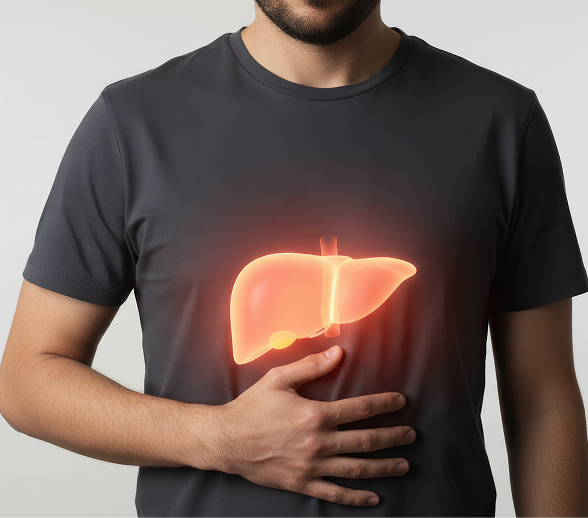
Cirrhosis often develops slowly, and in the early stages, symptoms may be minimal or absent. As the disease progresses, patients may notice:
Because many people do not develop symptoms until cirrhosis is advanced, early specialist assessment is essential if liver disease is suspected.
Advanced cirrhosis can cause serious complications, including:
A hepatologist may recommend the following tests to confirm cirrhosis and assess its severity:
Blood tests: To check liver function, clotting, and markers of disease. Ultrasound scan: To assess liver texture, size, and blood flow. Fibroscan (elastography): A non-invasive test to measure liver stiffness and scarring. CT or MRI scans: For detailed imaging and cancer screening. Liver biopsy: Sometimes performed for confirmation or when the cause is unclear.Cirrhosis cannot be cured, but treatment focuses on slowing progression, managing complications, and improving quality of life.
Lifestyle changes: Avoiding alcohol, maintaining a healthy weight, and eating a balanced diet. Medications: To treat underlying conditions (e.g., antivirals for hepatitis, immunosuppressants for autoimmune hepatitis). Managing complications: Diuretics for fluid retention, beta-blockers to reduce variceal bleeding risk, or procedures to drain ascites. Regular monitoring: Screening for liver cancer and checking for worsening disease.Liver transplantation: In advanced cases where liver function is severely impaired.
A hepatologist provides expert care for cirrhosis by:
 5.0 Rating on Doctify
Read testimonials from patients who have experienced Dr Alisa's expert care.

My consultation with Dr Akeel Alisa was highly satisfactory and he was very thorough. The Gastroscopy procedure was performed satisfactorily with no pain or discomfort at all. I am very pleased with treatment received so far.
Verified Patient
I was fully vaccinated investigated by Dr Akeel Alisa and I was reassured. My endoscopy and colonoscopy were straight forward and painless. I am very happy with the care I received.
Verified Patient
Dr Akeel Alisa and Nursing team at Cromwell Hospital Endoscopy team offered me great care and all was perfect. Well pleased.
Verified Patient