Comprehensive care for digestive disorders by Dr. Akeel Alisa

Coeliac disease is a lifelong autoimmune condition where the body’s immune system mistakenly reacts to gluten — a protein found in wheat, barley, and rye. When someone with coeliac disease eats gluten, their immune system attacks the lining of the small intestine, causing inflammation and damage to the villi (tiny finger-like projections that absorb nutrients).
This damage leads to malabsorption of nutrients, which can result in a wide range of digestive and non-digestive symptoms, as well as long-term health complications if left untreated.
Coeliac disease affects around 1 in 100 people in the UK, but many remain undiagnosed. Early recognition and treatment are key to preventing complications and restoring health.
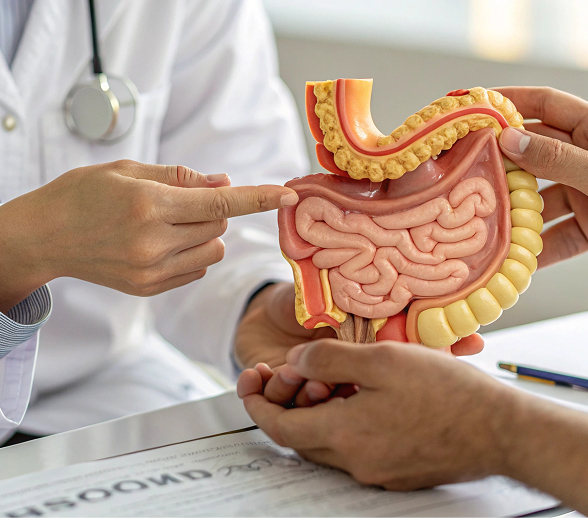
The symptoms of coeliac disease can vary greatly from person to person. Some people may have severe digestive problems, while others may have subtle or even no symptoms at all.
Common symptoms include:
Because symptoms can mimic other conditions such as irritable bowel syndrome (IBS) or lactose intolerance, many people go undiagnosed for years.
You should seek medical advice if you experience:
A gastroenterologist can arrange appropriate tests to confirm or exclude coeliac disease.
Diagnosing coeliac disease involves a combination of blood tests and endoscopy.
 Blood tests look for specific antibodies (tTG-IgA, EMA) linked to gluten sensitivity.Endoscopy and biopsy are used to confirm the diagnosis by checking for damage to the small intestine.
It’s important not to start a gluten-free diet before testing, as this can affect results and make diagnosis difficult.
The only proven treatment for coeliac disease is a strict lifelong gluten-free diet. This means avoiding foods that contain wheat, barley, rye, and many processed foods with hidden gluten.
With professional support, most people with coeliac disease can adapt well to a gluten-free lifestyle. Over time, the intestinal lining heals, symptoms improve, and the risk of complications is greatly reduced.
Additional aspects of treatment include:
Dietitian support: To help with meal planning and ensuring nutritional balance. Vitamin and mineral supplements: Especially iron, calcium, vitamin D, and B vitamins, if deficiencies are present. Monitoring for complications: Such as osteoporosis, liver disease, or small bowel cancer.If coeliac disease is not diagnosed and treated, ongoing gluten exposure can lead to:
Osteoporosis due to calcium and vitamin D malabsorption Infertility or pregnancy complications Neurological issues such as peripheral neuropathy Increased risk of certain cancers, particularly small bowel lymphoma Growth and developmental delays in childrenEarly diagnosis and strict gluten-free management significantly reduce these risks.
Adjusting to a gluten-free lifestyle can feel overwhelming at first, but with the right support, it quickly becomes manageable. Many supermarkets and restaurants now provide gluten-free options, making daily life easier. Patients often find that once they adopt a gluten-free diet, their symptoms dramatically improve, energy returns, and overall health is restored.
Specialist care is vital for the correct diagnosis and long-term management of coeliac disease. A gastroenterologist can:
 5.0 Rating on Doctify
Read testimonials from patients who have experienced Dr Alisa's expert care.

My consultation with Dr Akeel Alisa was highly satisfactory and he was very thorough. The Gastroscopy procedure was performed satisfactorily with no pain or discomfort at all. I am very pleased with treatment received so far.
Verified Patient
I was fully vaccinated investigated by Dr Akeel Alisa and I was reassured. My endoscopy and colonoscopy were straight forward and painless. I am very happy with the care I received.
Verified Patient
Dr Akeel Alisa and Nursing team at Cromwell Hospital Endoscopy team offered me great care and all was perfect. Well pleased.
Verified Patient