Comprehensive care for digestive disorders by Dr. Akeel Alisa

Fatty liver disease occurs when excess fat builds up inside the liver cells. While it is normal for the liver to contain a small amount of fat, too much fat can damage the liver and affect its ability to function properly.
There are two main types:
 Non-Alcoholic Fatty Liver Disease (NAFLD): The most common form, often linked to obesity, type 2 diabetes, and high cholesterol. Alcohol-Related Fatty Liver Disease (AFLD): Caused by excessive alcohol intake.
In both cases, fatty liver may progress silently for years, with little or no symptoms, until more serious damage such as inflammation (steatohepatitis), scarring (fibrosis), or cirrhosis develops.
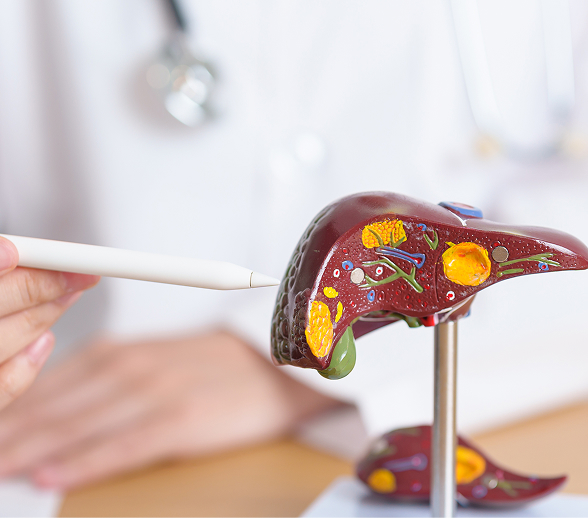
Most people with fatty liver disease do not experience obvious symptoms. When present, they may include:
In advanced cases, symptoms of liver damage such as jaundice, swelling, or easy bruising may appear.
Fatty liver is often linked to lifestyle and metabolic factors, including:
You should seek specialist advice if:
A hepatologist may recommend several tests to diagnose fatty liver and assess its severity:
Blood tests: To check liver function and rule out other causes. Ultrasound scan: Often the first test that detects fatty deposits in the liver. Fibroscan (elastography): A non-invasive test that measures liver stiffness and scarring. MRI or CT scans: Provide detailed images of fat content and structure. Liver biopsy: Sometimes required if inflammation or cirrhosis is suspected.There is no single medication to “cure” fatty liver disease, but lifestyle changes and specialist monitoring can make a major difference.
Weight management: Even a 5–10% reduction in body weight can significantly reduce fat in the liver. Healthy diet: A balanced diet rich in vegetables, whole grains, and lean protein, and low in refined sugars, is key. Exercise: Regular activity improves insulin sensitivity and helps reduce liver fat. Alcohol reduction or avoidance: Essential for alcohol-related fatty liver and beneficial in all cases. Medications: Some patients may require treatment for diabetes, cholesterol, or blood pressure as part of managing fatty liver.If left unmanaged, fatty liver can progress to:
Early intervention greatly reduces these risks.
A hepatologist provides expert guidance to:
 5.0 Rating on Doctify
Read testimonials from patients who have experienced Dr Alisa's expert care.

My consultation with Dr Akeel Alisa was highly satisfactory and he was very thorough. The Gastroscopy procedure was performed satisfactorily with no pain or discomfort at all. I am very pleased with treatment received so far.
Verified Patient
I was fully vaccinated investigated by Dr Akeel Alisa and I was reassured. My endoscopy and colonoscopy were straight forward and painless. I am very happy with the care I received.
Verified Patient
Dr Akeel Alisa and Nursing team at Cromwell Hospital Endoscopy team offered me great care and all was perfect. Well pleased.
Verified Patient